
Resetting or upgrading your engagement ring: what it costs and what to expect
The stone already has its story. The question is what it should live in now. Here's what can be done with a ring you already own, what moves the cost, and what it looks like when it's finished.
Three Different Jobs
People search "reset," "redesign" and "upgrade" for the same situation: a ring you have that isn't quite the ring you want. They're three different jobs, and the first thing I do in a consultation is work out which one you're actually asking for.
A reset keeps your stone and gives it a new setting. This is the one I see most. Usually it's a woman whose husband picked the ring as a complete surprise, and as grateful as she is, it either isn't her style because he never asked, or the setting sits too low for her wedding band to sit flush, and it bothers her every day. The stone stays. Everything around it changes. What I ask first: what do you love about it, what bothers you, and does a band need to sit flush against it?
A redesign turns the stones into a different piece. This happens a lot with heirlooms. A box of family rings becomes one ring. A brooch nobody wears becomes a pendant. What I ask first: which stones are in play, which pieces are sentimental exactly as they are, and what you'd wear if you could wear anything?
An upgrade means a bigger or better center stone. The setting might stay or go, depending on whether it can hold the new stone safely. And the old stone doesn't go in a drawer. When I've done upgrades, it becomes a bracelet or a necklace, sometimes an earring. A necklace is the most popular. What I ask first: what does the new stone need to be, and what should the old one become?
Here's what each of those looks like on a real hand.
Before and After
A solitaire that sat too low (reset)
A client wanted a simple solitaire. Her husband had bought her one, but it felt dated, 1980s style with heavy prongs, and it sat too low for her wedding band to sit flush. They'd already had it redesigned once, for a simpler look, and whoever did that didn't design it for a band to sit flush either. She came to me with images and was really clear about what she wanted. This was a ring that should have been designed right from day one. We kept her original stone, melted the old ring down for a metal credit, and put it toward the new piece.
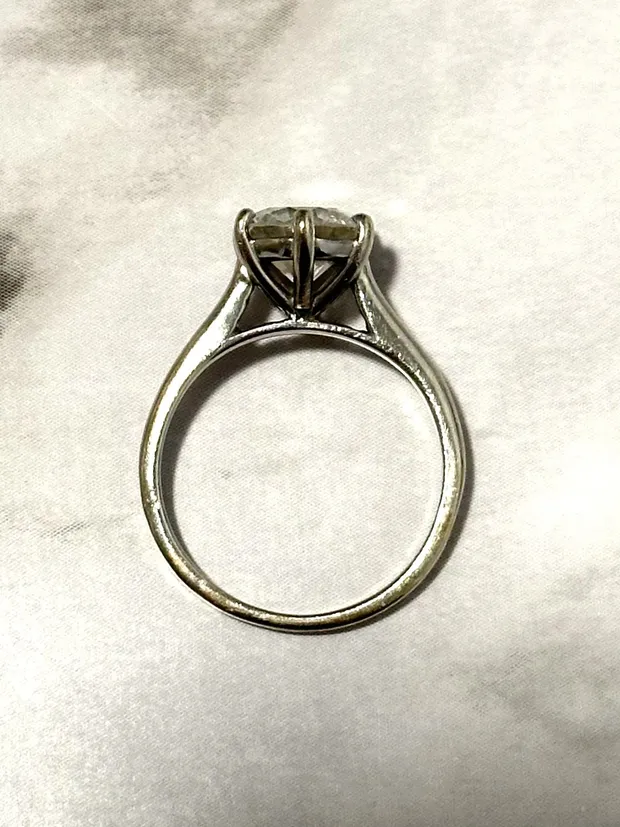 Before
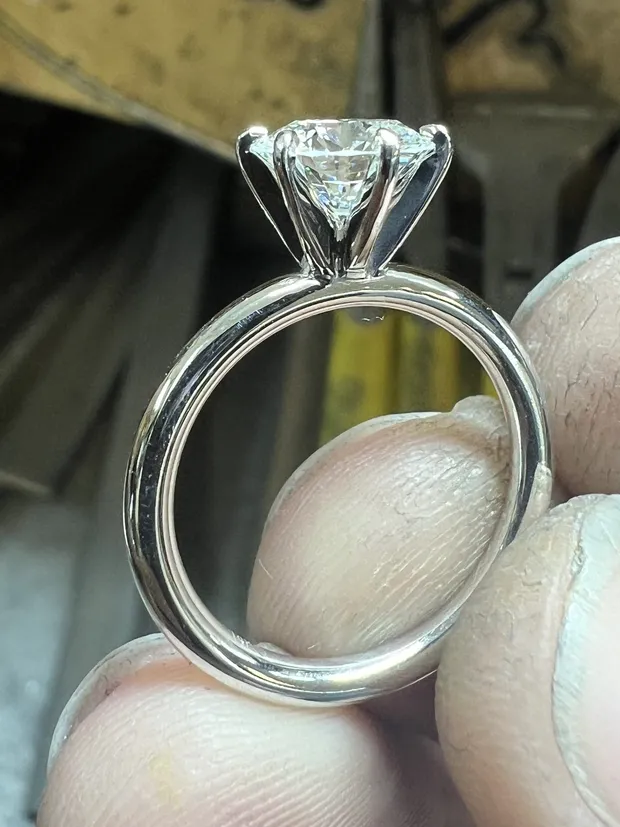 After
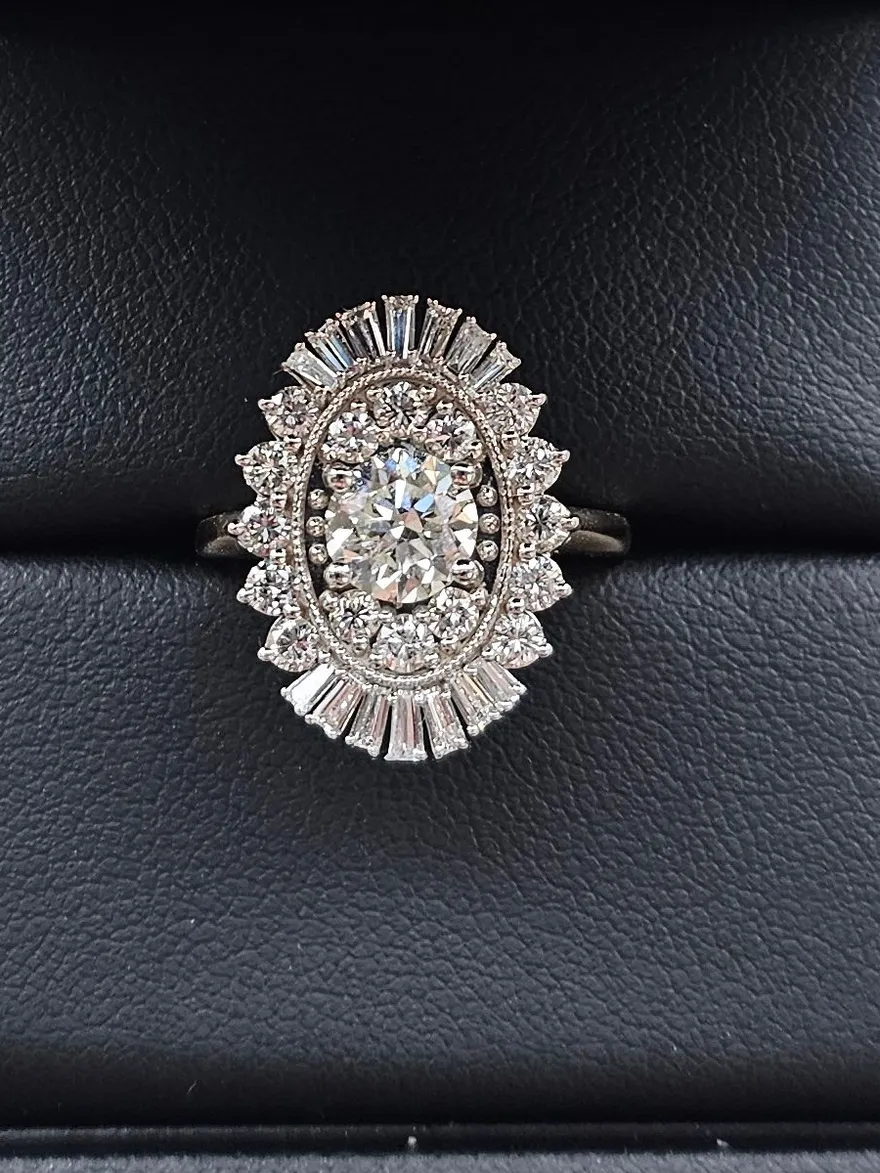
AfterThree family rings, one engagement ring (redesign)
She brought me jewelry from several family members: her grandfather's diamond out of his ring, and stones from closer family and aunts. Baguettes, and rounds in every size. And she had a picture of what, in her dream world, her engagement ring would look like. I'll be honest, when I saw everything laid out I wasn't sure how it would come together. But we started with her vision and worked out how the pieces fit, like a puzzle.
She wanted an oval center and only had rounds, so the oval is built out of rounds: her grandfather's stone in the middle, the baguettes above and below it, a band's rounds worked in around them. A few of the baguettes were too fragile to set safely, so they stayed in the box, and she kept them. Every stone we could use, we used, and it came in on her budget. She's got all those family members with her on a new chapter of her life, starting over while carrying the people she loves into it.
A twentieth anniversary (upgrade)
A client had been given a larger diamond by his mother, a stone she'd had for years, to mark his and his wife's twentieth anniversary. I designed her dream set around it: a halo of twenty diamonds for twenty years, and a whole new wedding set, three bands that stack with the new engagement ring.
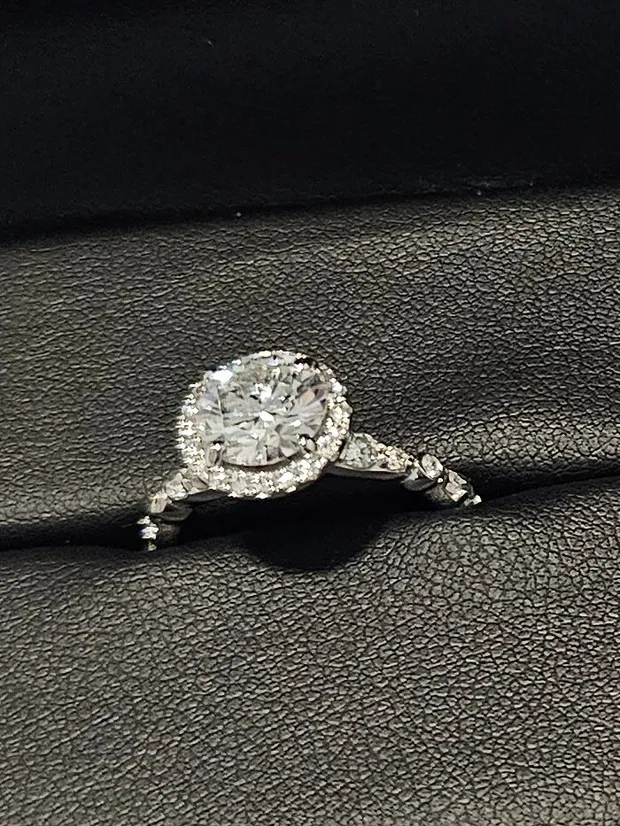 Engagement ring
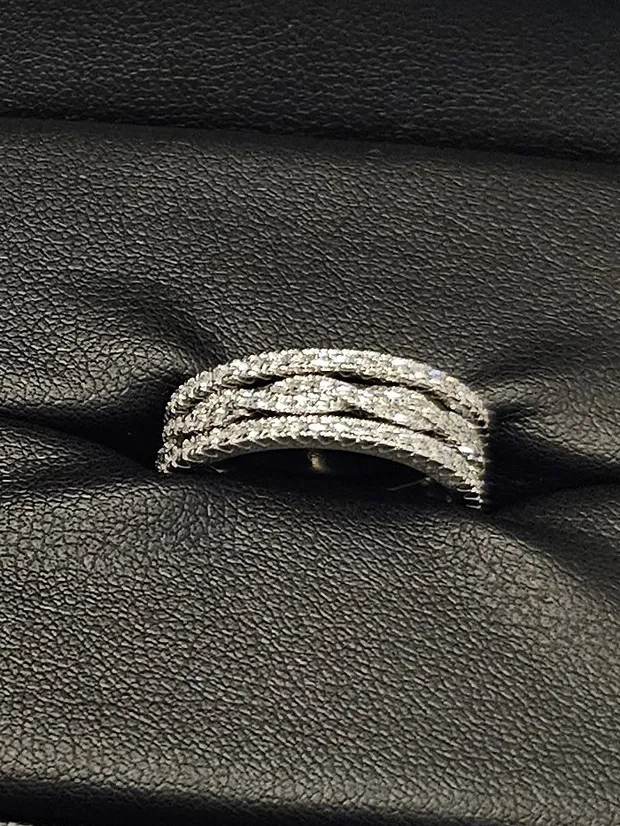 Wedding bands
Lowered, not redesigned
A client was given a ring from her fiancé's family. She loves it. It's quirky, it isn't perfect, and the only thing she doesn't love is how high it sits. So instead of a new ring, my bench jeweler and I made a plan to lower the head, and then we refurbished the whole thing: rhodium plating, re-engraving the details, re-tipping every prong so it's secure at the new height. I always come up with a couple of plans and let my clients choose. Not every ring needs to become a new ring. Sometimes the right job is the smallest one.
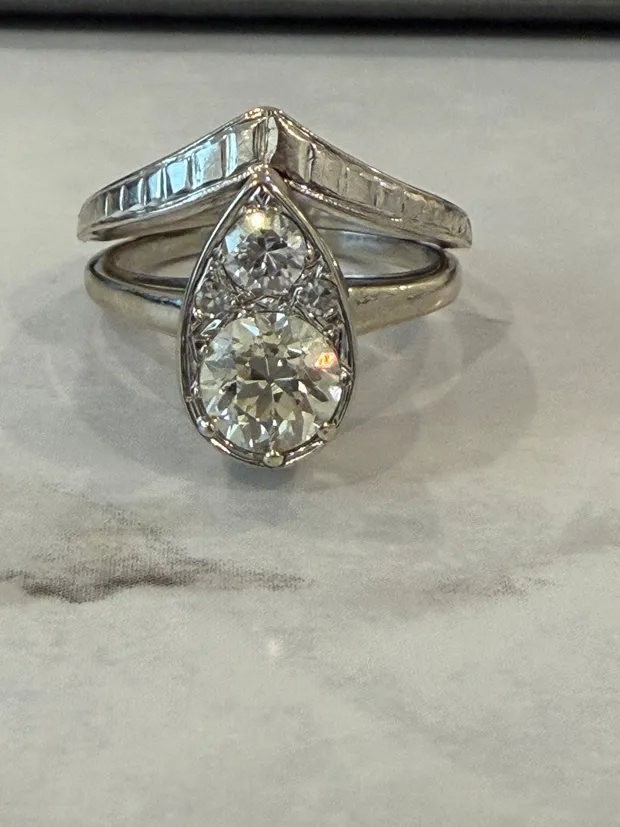 Before
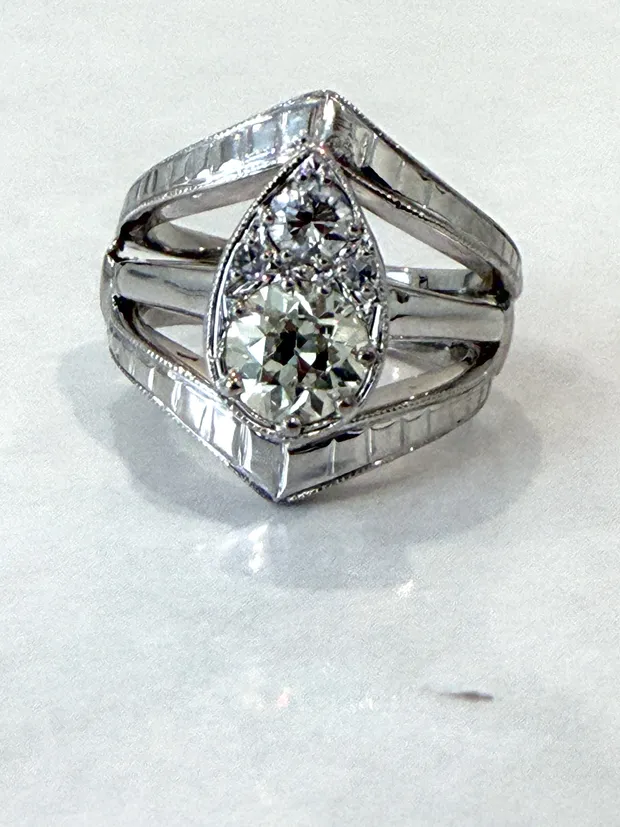 After
AfterWhich brings us to the question everyone has by this point.
What It Costs
I can't give you a floor for these jobs, and I'd be making it up if I did. It entirely depends. Sometimes it's really simple, and sometimes it's closer to a repair than a full redesign. What I can tell you is what moves the number, in order of how much it moves it.
Are we sourcing a new stone? This is the biggest variable by far. An upgrade with a new center stone is a stone purchase plus a setting, and the stone can be most of the cost. A reset or redesign that uses only what you already have skips it entirely. And if we are sourcing, you'll see the stone before you commit, and if you find a stone you love somewhere else, show it to me and I'll beat it.
Are we making a new piece from scratch? A new setting around your stone is a custom ring: design, CAD, new metal, hand setting. I wrote up what that part costs on its own in how much it costs to make a ring with your own diamond. Lowering a head or re-tipping prongs is a repair, and priced like one.
How complex is the design? A four-prong solitaire and a hand-engraved double halo are different amounts of work, and the difference shows up in the number.
Do you have metal to put toward it? The old ring, or any gold in a drawer, becomes a credit. This is the lever most people don't know they have, so it gets its own section.
At the first consultation you'll leave with a range by design direction, and you'll get a firm quote once we have a CAD and know exactly what we're building. The consultation is always free.
What Happens to the Old Setting and Metal
It's up to you. Some people keep the old setting and we put a gemstone in it so it can still be worn. Most people recycle the metal toward a credit on the new piece. Either way we talk it through and decide together before anything is touched.
The metal credit saves real money, and it's one of the main reasons I offer it. I melt your old metal down and apply its value toward the new piece. I don't cast it straight into your new ring, because reused gold can introduce porosity and quality problems, and starting with new gold is the more secure way to build something meant to last. It's more work for me, which I think is why many jewelers won't do it. But it feels really good to be able to say that the bracelet of your grandmother's you'll never wear gets to be part of your engagement ring. I ask in every first consultation now: do you have any gold you'd like to recycle?
And if the old stones turn out not to be what you thought, that changes less than you'd expect. It happens all the time, and I'll tell you kindly and plainly: this one isn't a diamond, it's probably a CZ or a rhinestone. Then we have a couple of options. We can use it in your piece anyway, or we can source other stones. How do you feel about it? It's still part of your family and your story, and what's real is how you feel about those pieces.
When Not to Reset
Sometimes the honest answer is no, or not like that.
A fragile stone. Emeralds, old chipped stones, anything with a fracture near the edge. Depending on how fragile it is, I leave the decision to you, unless I really think it's a bad idea, and then I'll tell you there's no way to work on this without real risk to the stone. Everything goes under the scope first, and you hear what I see before anyone touches it.
A band that's too thin. I will never say yes to a 1 millimeter shank again. It's not structurally sound. If the reset you're picturing is a whisper-thin band under a big stone, I'll tell you what happens to that ring in a couple of years, because I've watched it happen. A client lost her center stone from a 1.5 millimeter band, and I haven't made one since.
A setting that is the sentimental part. If a setting means something to you, I will never push to redesign it unless your goal can't be met with the original ring. That's the lowered-not-redesigned ring above. If what bothers you can be fixed without losing the ring, that's the plan I put first.
An antique that should stay an antique. Now and then someone brings me an Art Deco ring that's so beautiful, and made in a way we don't make things anymore, that I say, I really don't know if you should touch this. If we take it apart for the stones, we might be trading away something special. I've had that conversation end with someone seeing their ring in a completely different light and deciding to keep it exactly as it is. That's a great outcome too.
How It Works
The consultation. Ninety minutes, free, in the studio in West Los Angeles or over a video call. Bring the ring, any other pieces that might be in play, and whatever pictures you've been saving. We cover who you are, who you're creating for, what the process has been like so far, what matters to you, your concerns, the design and stone details, what the whole process looks like start to finish, and the estimate and payment schedule. You leave with a direction and a range for it. Once you decide to go ahead, a $500 design deposit starts the design.
The stone gets looked at first. Loupe and scope, before any quote. Chips, fractures, measurements, and whether it can come safely out of the old setting. I photograph everything, before and after.
Design. Sketches, then a CAD you approve before anything is cast. Major changes after the CAD count as a redesign and cost more, so we get it right at the CAD stage.
If you're not in Los Angeles. I work with clients all over the country, and I've done resets remotely several times. I send you a shipping label. Your pieces come to me overnight, insured, signature required. I do the work, and they go back the same way. Stone showings happen on camera, with detailed video in several lighting conditions and a scope that live-streams so you see what I see. I've never had an unhappy virtual client. The only difference is that I can't give you a hug in person when your piece is finished. If you're in Denver, I wrote up how I work with Denver clients from Los Angeles.
Questions About Resetting or Upgrading a Ring
Can I reset my diamond into a new setting?
Yes. That's the most common job I do with a ring someone already owns. Your diamond stays and the setting is designed around it, usually because the original wasn't her style or sits too low for a band.
How much does it cost to reset a ring?
There's no honest floor. It depends on whether we're sourcing a new stone, building a new setting, how complex the design is, and whether you have metal to put toward it. A new setting around your own stone is priced like a custom ring, and I've written that up separately. You get a range at the free consultation and a firm quote at CAD.
Can I upgrade the diamond and keep the setting?
Sometimes. A setting is built for a specific stone size, and most settings tolerate about 0.2 millimeters either way. A noticeably bigger stone needs a new head at minimum, and often a new setting, so it's secure for the next fifty years rather than squeezed in.
Can an old ring be redesigned into something else, like a pendant?
Yes. Redesigns are most often heirlooms: a ring nobody will wear becomes a pendant, a bracelet, or part of a new ring. The old center stone from an upgrade usually becomes a necklace.
What happens to my old setting?
Your choice. Most people recycle it toward a metal credit on the new piece. Some keep it and we set a gemstone in it so it can still be worn. Either way we decide together before anything is touched.
Can you use the gold from my old ring in the new one?
As a credit, yes. I melt the old metal and put its value toward the new piece rather than casting it straight into the new ring, because reused gold can be porous and I want the new ring built to last. Clients have covered a large share of a new piece this way.
Is my stone safe during the work?
I inspect it under the scope before quoting and tell you if removing it from the old setting carries real risk. If it does, you hear that first and you decide. Pieces ship insured, overnight, signature required, in both directions.
Should I reset it or repair it?
If what bothers you can be fixed without losing the ring, that's the first plan I offer. Lowering the head, re-tipping prongs, refinishing: that's a repair, and sometimes it's all the ring needs.
Bring the ring.
Free 90-minute consultation, in West Los Angeles or over video. If you're not local, I'll send the shipping label.
Book a Free Consultation