How much does it cost to make a ring with your own diamond?
If you already have the diamond, you've done the expensive part. What's left is the ring: the setting, the metal, and the hands that build it around your stone. Here's what that costs, what moves the number, and what I do before I give you one.
The Short Answer
Most custom pieces I make around a client's stone come in somewhere between $3,000 and $5,000. That isn't a minimum I need to take on a project. If I could do it for $1,500, I would. It's just what the materials and the design work around a stone typically come to once you're building something made to last.
That buys a ring designed for your stone, not a stock setting squeezed to fit it: design time, a CAD you approve, the stone inspection, new metal cast for your piece, hand setting, and a quality check before it leaves. Every project gets all of that, whatever the budget. What changes the number is the ring itself.
A simple solitaire, when you know what you want and the stone is sound, runs about $2,500 to $3,000 depending on the metal. From there the number climbs with the metal, the detail, and the size of your stone. At the far end, an eternity-style setting in natural emerald cuts, with every prong covered in diamonds, usually lands between $7,000 and $13,000 and can go well past that. The top is open, because the design is.
And if the number you have in mind sits below these, tell me anyway. I work miracles all the time. Don't let the numbers scare you.
So what actually moves a setting from one end of that range to the other? Six things, mostly.
What Moves the Number
The metal, and how much of it. 14K, 18K or platinum, and then the weight. On a simpler ring, metal is most of the cost, and gold is at record highs right now. That's the sticker shock most people don't see coming if the last ring they bought was years ago.
The setting style. A four-prong solitaire is the simplest thing I make. A halo, a bezel, hand engraving, a gallery with a detail nobody sees but you: each one adds design time and bench time.
The size of your stone. A 5 carat needs more metal, and more care, to sit securely and last a hundred years than a 1 carat does. I'm not going to do whisper thin bands on a 5 carat.
The condition of the stone. A chipped girdle, a fracture near the edge, or an unusual cut needs a setting designed to protect it. That isn't a surcharge. It's the difference between a ring that lasts and one that comes back.
Whether we recycle your old metal. Gold from the old ring, or from a drawer somewhere, becomes a credit toward the new piece. It's one of the biggest levers you have. More on that below.
Side stones. Accent diamonds, a birthstone tucked into the gallery, a three-stone layout. Small natural accents, 1 to 1.5 millimeters, cost almost the same as lab, so if you want naturals there, have them.
I can usually estimate a setting on the spot. But not before I've done one thing.
First, the Stone Gets Looked At
Before I quote anything, I look at your stone. Not the paperwork. The stone.
I inspect it with a loupe and my scope, and I prefer the scope because I can put what I'm seeing on a screen and walk you through it. Are there chips around the girdle? Any fractures that would cause trouble in setting? What are the exact measurements, so we know what to design around and which side stones would work? I photograph everything, before and after.
This is where being a third-generation jeweler, a GIA Graduate Gemologist and a designer all matter at once. In one conversation we cover what the stone is, what it can safely go into, and what it's going to look like once it's there. If the project is quotable in that meeting, you'll get my best estimate then. If it's a box of family stones and an inspiration picture, you'll get a range by design direction, and a firm number once we have a CAD.
Sometimes the stone isn't what you were told it was. People bring pieces out of a shoebox they inherited and say, I don't even know what this is, can you help me figure it out? I tell them right away that I'll be honest with them, and that whether or not it's real, if it holds sentimental value, that's value in itself and worth celebrating. What's real is how you feel about that piece.
If you're still deciding whether to buy, read how I source and verify diamonds first. It'll save you from buying off the piece of paper. And if you find a stone you love somewhere else, show it to me and I'll beat it.
Two kinds of stone come through my door, and the conversation is different for each.
Two Situations
A stone bought online
He proposed with a vintage ring. She was grateful, and it wasn't her. Not her style, and the center stone had started to move in its setting. The jeweler they went to first told them it couldn't be touched and steered them toward trading it in. By the time they found me, they weren't sure who to trust.
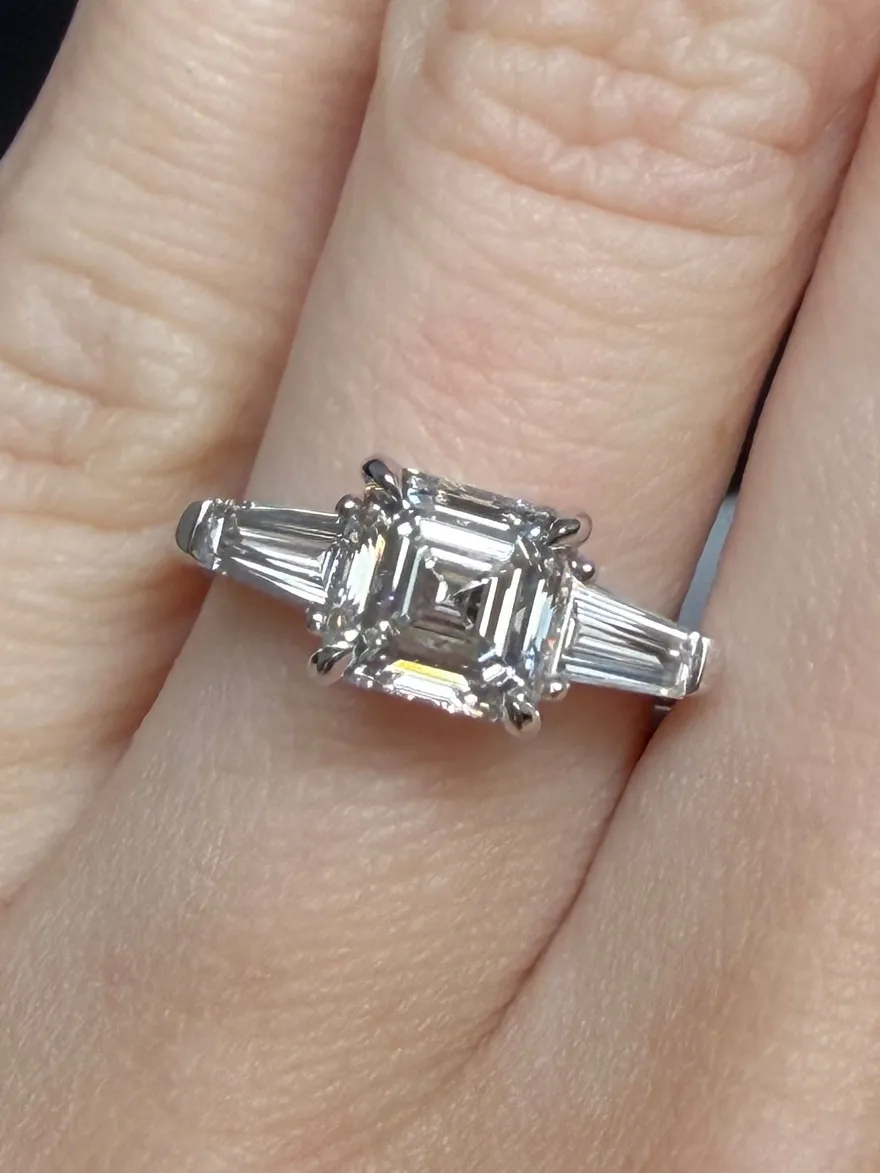
They'd found an Asscher cut lab diamond online, and she had a clear picture of the band she wanted. That's what they brought me: the stone, the vision, and not much trust left. I told them what I tell everyone. The stone gets looked at first, and if it isn't what the listing said, they'd hear it from me before we drew a single line. It was exactly what they'd been told. We designed the setting around it, the way she'd pictured it, and the old ring went toward the metal credit.
Almost the first thing people ask when they bring me a stone they chose is, what do you think of it? My answer is usually a question back: how do you feel about it? If you love it, that counts for more than my opinion. If you're not attached to it yet and it isn't beautiful, I'll tell you that too, kindly, and help you find one that is.
A family stone
An heirloom is a different conversation, because we're working with something sentimental. I've set stones that weren't precious, and stones that were risky enough to work around that other jewelers had declined them. It starts with transparency about what to expect. From what I can see through the scope, this one has some inclusions that will make it tricky to reset. What are you comfortable changing? If you'd see that inclusion in an open setting, are you okay with that, or should we keep it in a bezel?
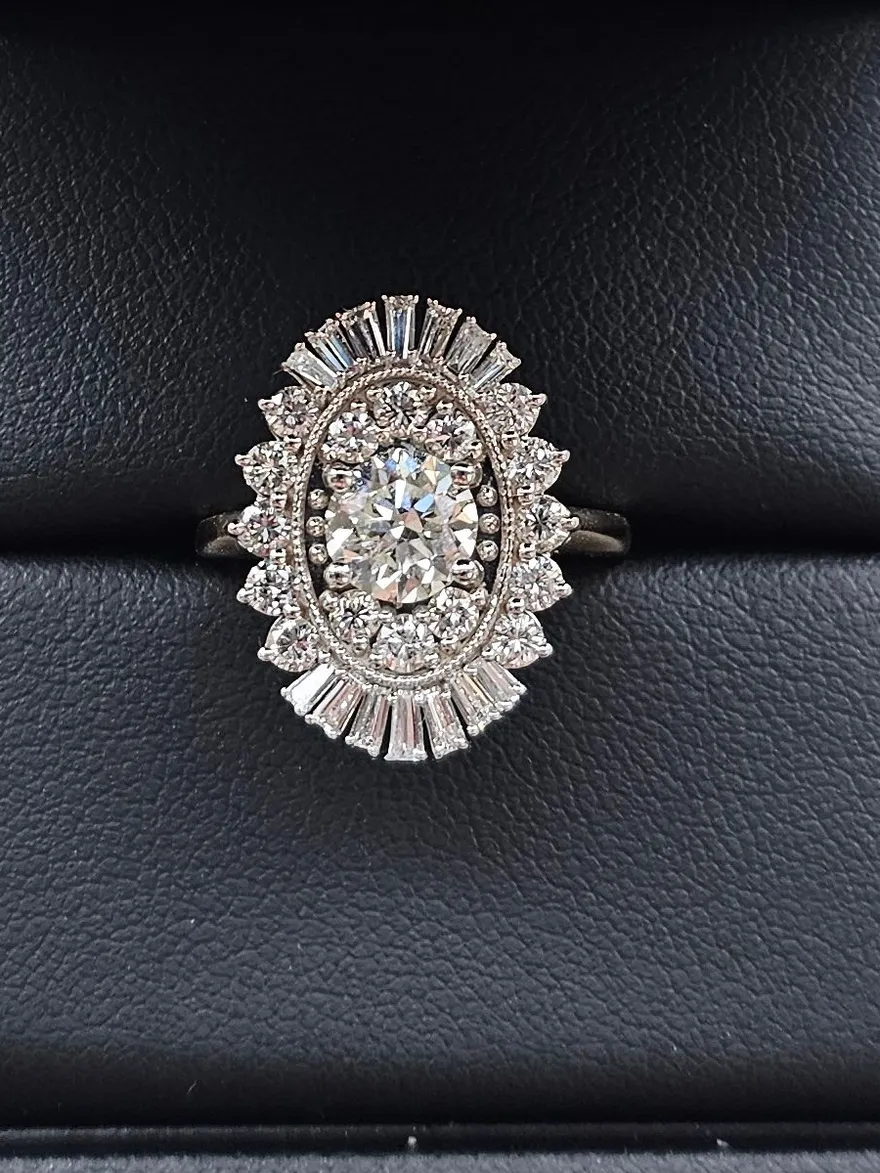
One client came in with three rings from three family members and wanted an oval center. She only had rounds. So we built an oval silhouette out of the rounds, with her grandfather's stone in the middle and the baguettes and a band's rounds worked in around it. A few of the baguettes were too fragile to set safely, so they stayed in the box, and she kept them.
There are only two kinds of stone I'll say no to. A newly bought stone I can't get excited about, when I know I could help someone find one they'd be prouder of, and I'd be prouder to design around. And a stone with a serious structural problem, an emerald or a diamond or any gemstone that could come apart when it's removed from its setting. We inspect for that, and I'll tell you what's realistic.
Most of the other surprises aren't about the stone at all. They're about what people expected the ring to cost.
What People Get Wrong
That bringing your own stone makes the ring cheap. A question I get a lot: so it's about $300, right? I understand where it comes from. You've skipped the most expensive part of a ring. But I can't buy the weight of gold for $300, let alone design and set a ring around a stone. You skip the stone. You don't skip the ring.
That any stone fits any setting. I hear it from jewelers all the time: pick any stone, we'll make it work. What that usually means is a setting forced around a stone it wasn't made for, metal added or taken away, and prongs that chip and stones that fall out a year later. Even my made-to-order rings have a tolerance of 0.2 millimeters in any direction, and past that the stone structurally can't go in. Most stones people bring me aren't calibrated sizes. They got a good deal, or it's an heirloom. The only way I know to build something for that stone that will last is to build it custom, even if it's a plain solitaire. The upside: custom means any stone can fit any design.
That an online stone is what the listing says. Sometimes it is, and it's wonderful when it is. But it's hard to tell from pictures or video. Two stones can be identical on paper and one of them just sparkles more. Jewelers call it life. Don't buy a stone until you can see it in person, or through a trusted gemologist who can tell you honestly what to expect.
That the old gold is worthless. It absolutely saves money. I melt down your old metal and apply it as a credit toward the new piece. I don't cast it directly into your ring, because reused gold can introduce porosity, and starting with new gold is the more secure way to build. I've had clients cover most of a new piece with recycled gold. Most jewelers don't offer it, so most people forget to ask. I ask in every first consultation now.
If It's an Heirloom
If you already have a stone you love, there are a couple of ways to approach getting your dream ring. A reset keeps your stone and gives it a new setting, built around it the way it should have been the first time. A redesign goes further: several family pieces, or a ring you'd never wear as it is, becoming one new piece. And sometimes the honest answer is to keep the original setting and modify it, lowering a head that sits too high or re-tipping the prongs, which is closer to a repair than a design project. If a setting is sentimental to you, I will never push to redesign it unless your goal can't be met with the original ring.
The heirloom redesign page walks through what to expect when the box comes in. If you're weighing a reset against a redesign, start with resetting or upgrading your ring. And if what you have is a setting bought elsewhere and a stone to go into it, I can do that, with conditions. It's bench work rather than an A. D'Mae piece, and I treat it as a repair: honest look first, then two or three options, and you choose.
If you don't have a stone yet and want the from-scratch number, that's a different article: how much a custom engagement ring costs.
Questions About Setting Your Own Diamond
Does using my own diamond make the ring cheaper?
It takes the most expensive part of a ring off the table, so yes, the total is usually far lower than a ring with a sourced center stone. The setting itself isn't cheaper for being built around your stone. Most custom pieces around a client's stone run about $3,000 to $5,000, and a simple solitaire can come in a little under that.
Can you set a diamond I bought online?
Yes, once I've looked at it. I inspect every stone under the scope before quoting, and I'll tell you what I see, including whether it matches what you were sold. If it's sound and you love it, we build around it.
Can you reuse the gold from my old ring?
Yes, as a credit. I melt the old metal and put its value toward the new piece rather than casting it directly, because reused gold can introduce porosity. Clients have covered a large share of a new piece this way.
Do you need to see the stone before you quote?
Yes. I don't quote a stone I haven't inspected. Chips at the girdle, fractures, and the exact measurements all change what the setting has to be. If you're outside Los Angeles, you can ship it insured, overnight, signature required, and I'll send it back the same way.
Is the consultation free?
Yes. The consultation is always free, 90 minutes, in the studio or over a video call. Once you decide to go ahead, a $500 design deposit gets you onto my client book and starts the design.
How long does a setting-only project take?
If you know exactly what you want and the stone is sound, I can have a CAD to you in about a day and the ring finished in a week or two. Most projects take longer, because most people want details worth taking time over: engraving, birthstones, a gallery that means something. A tight deadline is possible with an expedite fee.
What if my stone is damaged?
It depends on the damage. A chip at the girdle can often be hidden by the setting. A fracture that runs through the stone may mean it can't safely be removed from where it is. I'll show you what I see on the scope and give you the realistic options. I won't set a stone that could come apart in the process.
Bring the Stone.
Free 90-minute consultation, in West Los Angeles or over video.
Book a Free Consultation