
Your Engagement Ring Band Might Be Too Thin. Here's How to Tell.
A client came to me a few years ago with a very clear vision. She wanted a ring where you basically couldn't see the band at all. Just a giant stone on her finger and as little metal as possible. She wanted delicate, feminine, and invisible.
She asked for a 1 millimeter band.
We talked about it. I explained the trade-offs. I told her that at that width, the ring was going to be structurally vulnerable in ways that would almost certainly cause problems. Gold is durable, but it's not indestructible. A band that thin can get out of round over time, diamonds on the band can start to shift and pop out, and in a worst case, the prongs holding the center stone can loosen to the point where you lose the stone entirely.
She understood the risks. We compromised on 1.5 millimeters. I was still concerned, but she signed off on it.
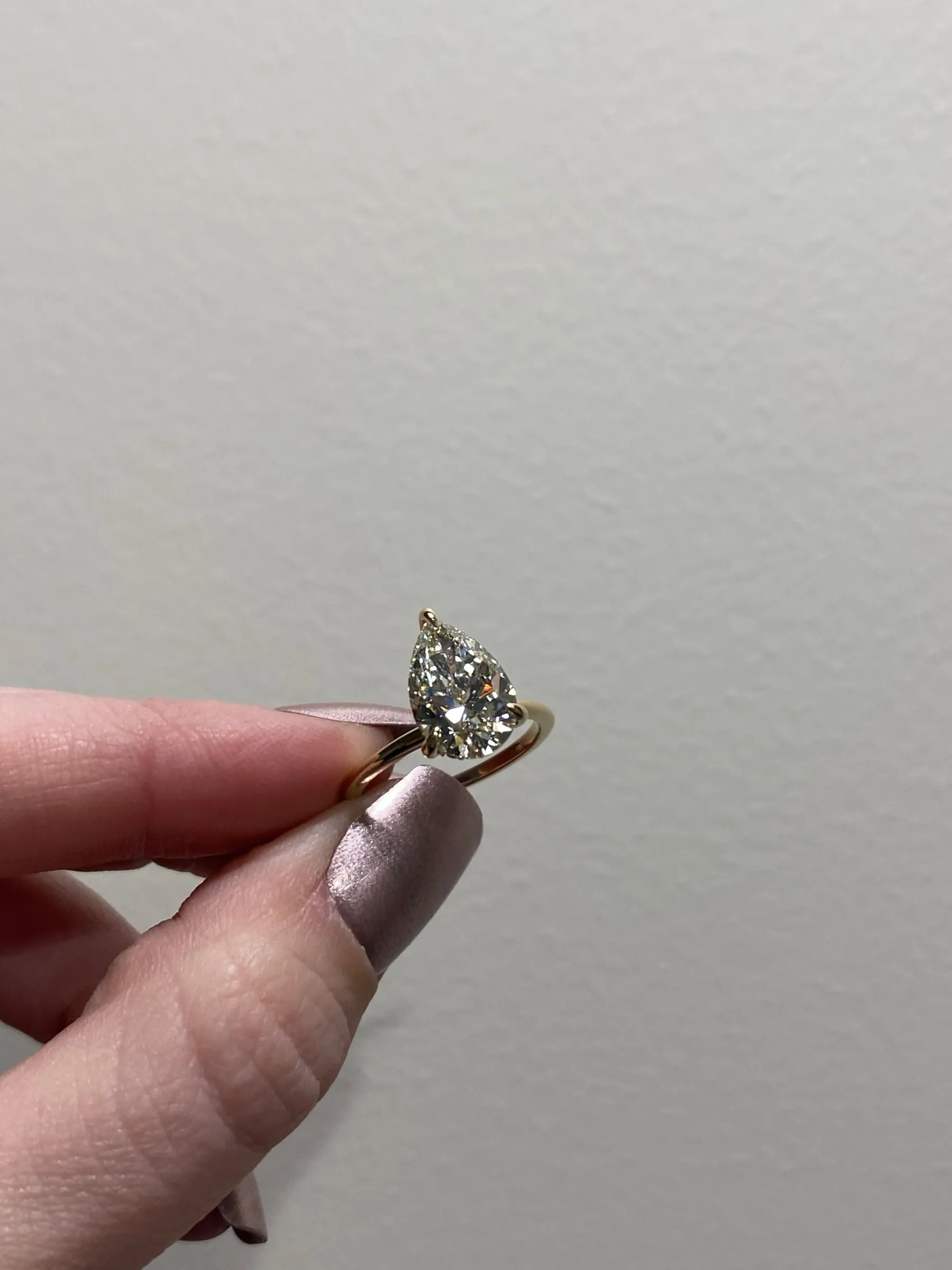
A couple of years later, she lost her center stone.
She Saw It Coming (Because I Told Her)
To her credit, she called me immediately and said exactly the right words: "You warned me. You totally warned me. This is not your fault." She had insured the ring, which was smart. And when we sat down to talk about what to do next, she said something that made me feel better about the whole experience: "Let's make the band wider this time."
We redesigned her ring with a thicker band, more depth, and two additional prongs on the center stone. It looks just as beautiful. And it's going to last.
I haven't made a band at 1.5 millimeters since. I won't go below 1.7, and even that's pushing it. Having that conversation with a client who just lost her diamond reinforced something I already believed: my job isn't to give you whatever you ask for. It's to make sure what you get is going to hold up for the rest of your life.
Why This Keeps Happening
The whisper-thin band trend took off because of social media and celebrity rings. People see a massive center stone on a barely-there band and think that's the look they want. And visually, I understand the appeal. It puts all the focus on the diamond. It looks delicate and feminine. It photographs well.
But there's a big difference between how a ring looks in a photo and how it holds up after a year of daily wear.
Here's what actually happens to a band that's too thin over time. Looking at the ring through what we call the through-finger view, it stops looking circular. It starts to oval out, or even wobble. If there are small diamonds set into the band, they start to shift in their settings as the metal warps around them. Prongs that are anchored in too little metal begin to loosen. And the structural connection between the band and the head of the ring - the part holding your center stone - gets weaker.
That's how center stones fall out. The whole structure just doesn't have enough metal to keep everything secure over time.
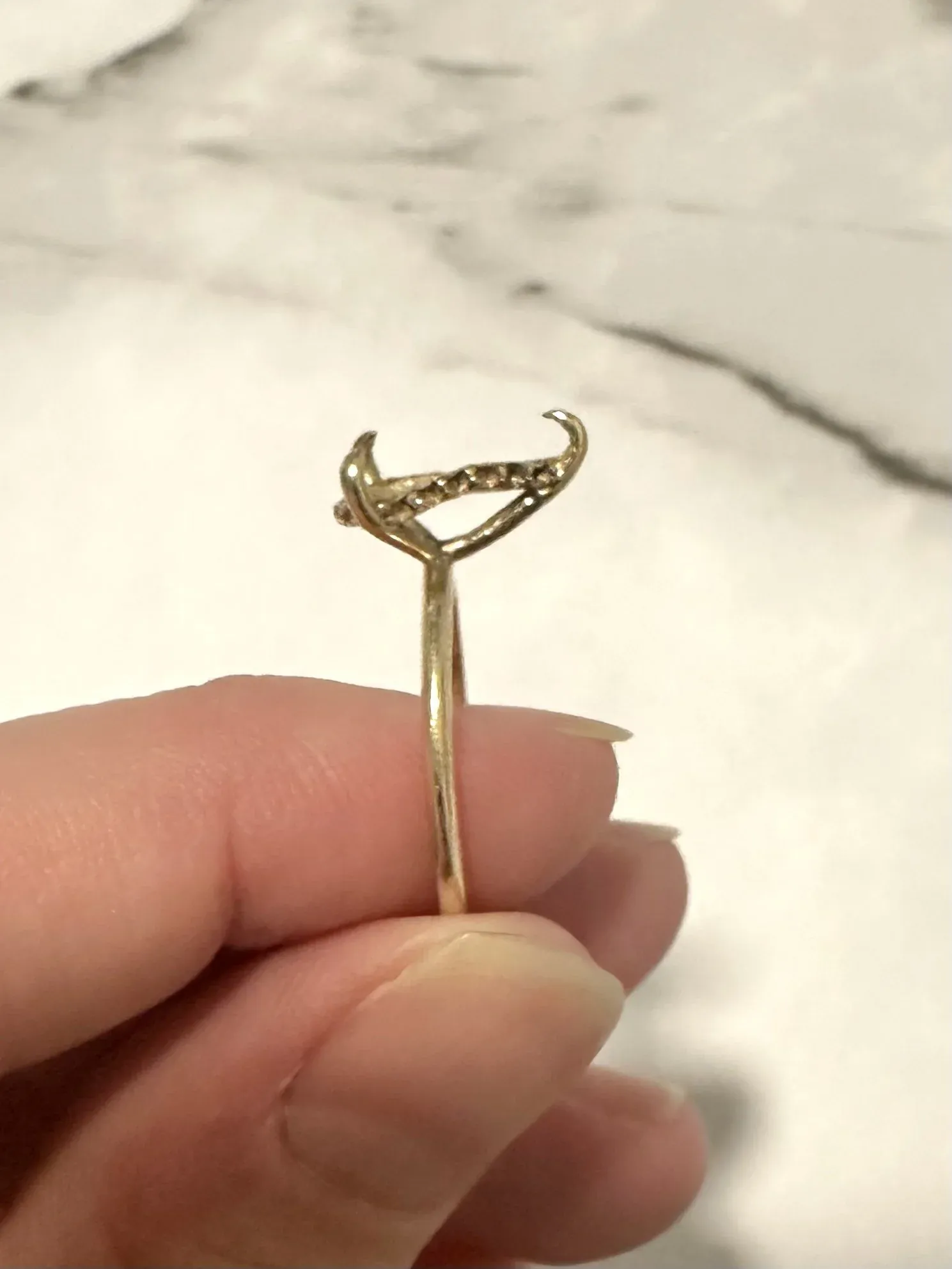
Band Width Comparison
The Lauren Bezos Example
I'm not going to pretend I don't have opinions about high-profile rings. When I saw Lauren Sanchez Bezos' engagement ring, my first thought was that it was a structural disaster. The band looked like it was probably no bigger than 1.5 millimeters supporting a massive center stone. My prediction? That stone is going to have problems within a year or two. I wouldn't be surprised if her designer had her sign a waiver.
That ring has been talked about endlessly for how it looks. Nobody's talking about whether it's going to last. And that's kind of the whole problem with how the industry markets engagement rings right now - the conversation is always about the photo, never about the physics.
What I Actually Recommend
For most engagement rings, I recommend a band width of about 2 millimeters. That's the sweet spot between looking refined and being structurally sound. It's not chunky. It doesn't look heavy. It just has enough metal to do its job for the next several decades.
If you really want the appearance of a thinner band, there are design approaches that get you there without the structural risk. A slightly larger center stone creates more contrast, which makes the band look thinner by comparison. You can also add a touch more depth to the band - making it a little thicker from top to bottom while keeping the width narrow from the top-down view. That gives you the delicate aesthetic without gutting the structural integrity.
The trend is actually shifting now anyway. People are starting to move toward chunkier, bolder bands. Four or five millimeters isn't unusual anymore. But regardless of what's trending, the principle stays the same: I'd rather design you a beautiful ring that holds up for a hundred years than a fragile one that looks incredible in photos and fails in real life.
The Conversation I Always Have
If a client comes to me with a photo of a whisper-thin band and says "I want this," I'm not going to say no. But I am going to have an honest conversation about what that decision means. I'll walk through the trade-offs, show you the structural considerations, and make sure you understand what you're choosing.
Most of the clients I work with, once they hear the reasoning, are completely fine going with a slightly wider band. Quality and longevity matter more to them than matching a trend. And honestly, when the ring is proportioned well, you don't even notice the extra half millimeter. You just notice that it looks right.
I love design. I care deeply about aesthetics. But if your beautiful ring falls apart in a year, then I haven't done my job. The whole point of creating something custom is that it lasts.
Worried About Your Ring?
If you're concerned about your current ring's band width, or you're designing a new one and want honest advice about what will actually hold up, I'm happy to talk through it.
Book a Free Consultation